
Forza Horizon 6 Review: Japan Was the Reset the Series Needed
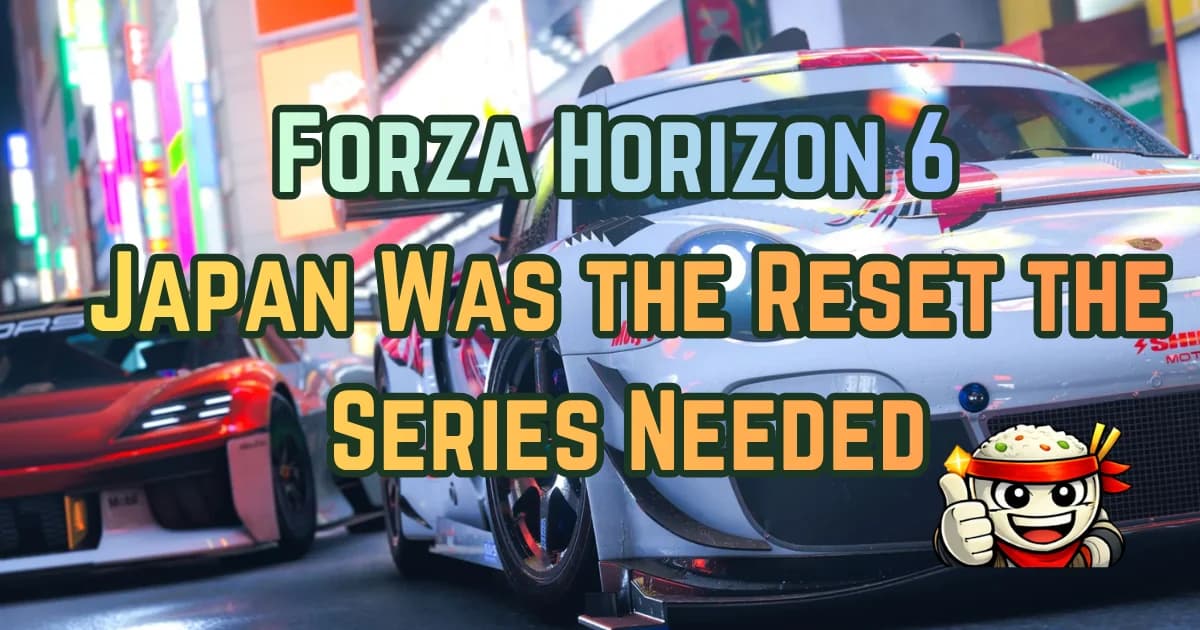
Forza Horizon did not need to become more complicated. It needed a location that made driving feel intentional again. Forza Horizon 6 gets there by moving the festival to Japan, where the roads, cities, mountains, car culture, and sense of place finally give the series the reset it has been chasing since Horizon 4.
This is an early access review based on the Premium Edition window before the May 19, 2026 standard launch on Xbox Series X|S and PC. The PlayStation 5 version is still planned for later in 2026, so this is not the final word on every platform. It is enough time to understand the core game, and the core game is clear: Horizon is still Horizon, but Japan gives it sharper edges.
Why does the Japan setting carry real weight?
The easiest compliment is that Japan looks beautiful. That is true, but it is not the important part. Every Horizon game looks beautiful. The question is whether the world changes the way you drive.
Here, it does.
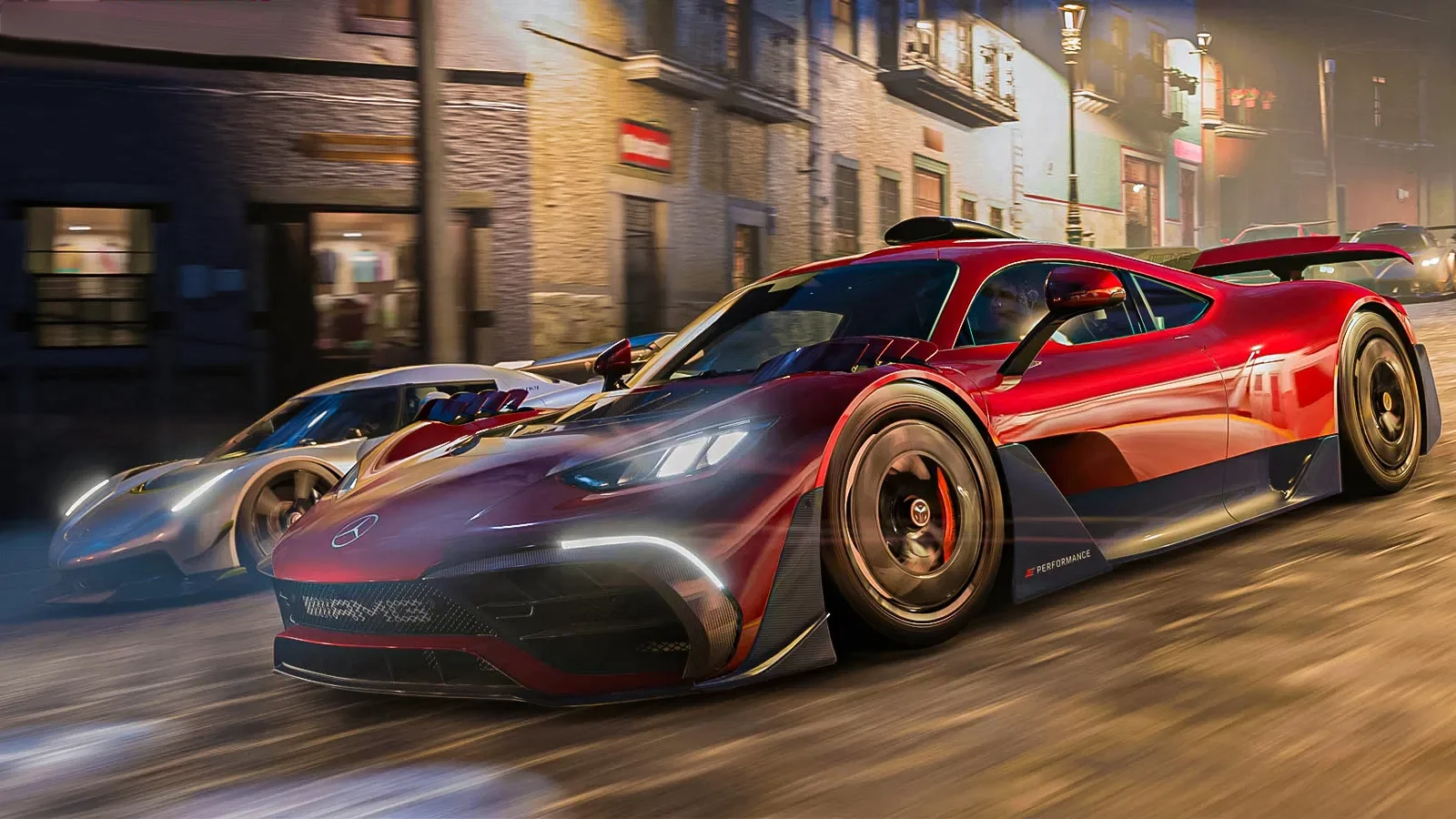
The map gives you dense urban streets, coastal routes, industrial zones, rural roads, mountain passes, and wide festival spaces without making them feel like disconnected theme park biomes. Tokyo City is the obvious showpiece, and Playground has been explicit that it is the largest urban area the series has built. That matters because cities in Horizon have often looked better than they drove. This one has actual rhythm: tight corners, vertical sightlines, fast transitions, and enough alternate routes to make free roaming feel active instead of decorative.
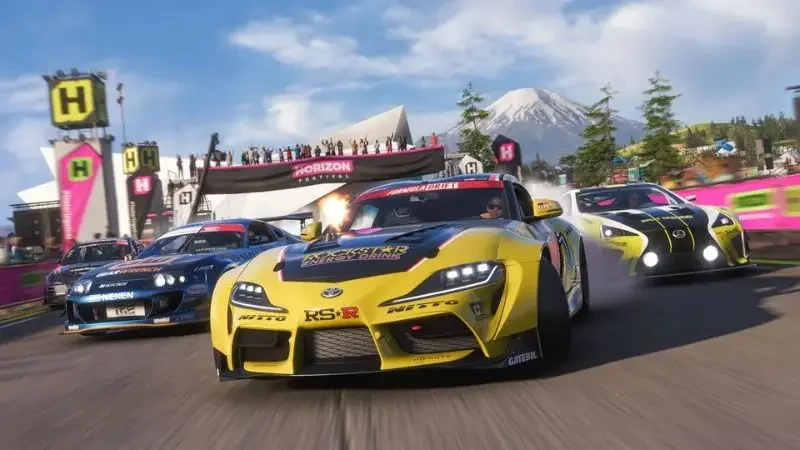
The mountain roads are the better long-term win. Horizon has always been at its best when the route itself creates drama. Japan's touge-inspired roads give the game that drama naturally. You do not need a scripted set piece to make a downhill run exciting when the road already demands throttle discipline, clean braking, and trust in the car.
That is the difference between a pretty map and a strong driving map. Horizon 6 has both.
Why does the campaign structure make more sense?
Forza Horizon 5 handed you superstar status almost immediately. It was generous, colorful, and frictionless, but it also flattened the sense of progression. When every race is a celebration of your existing greatness, the world starts to feel like a reward machine instead of a place you are earning your way through.
Horizon 6 makes a smarter choice. You arrive as a tourist trying to work into the festival, complete Horizon Qualifiers, unlock Wristbands, and climb toward Legend status. That structure is not hardcore progression. This is still an open-world arcade racer that throws cars at you constantly. But the framing gives your first dozen hours a better shape.
The Wristband climb works because it gives the festival hierarchy again. You are not just clearing icons from a map. You are proving that you belong in faster cars, bigger events, and more demanding routes. It is a light touch, but Horizon benefits from even that much resistance.
The Gold Wristband path toward Legend Island gives the campaign a destination that feels more concrete than another seasonal checklist. Horizon does not need a serious story. It needs momentum. This version understands that.
How does the driving feel different in Japan?
The handling model remains approachable. If you bounced off simulation racers, Horizon 6 is not suddenly trying to become Assetto Corsa. Cars are readable, assists are generous, rewinds are still there, and the game wants you to have a good time before it wants to punish you.
What changes is how often the roads ask you to pay attention. High-speed desert blasting was fun in Horizon 5, but it often let power solve everything. Japan's road network creates more moments where car choice and driving style matter. A heavy hypercar can dominate an open sprint and feel clumsy five minutes later in a tight mountain section. A modest JDM build can become more satisfying than an absurd top-speed monster because the route rewards precision.
That is the kind of tradeoff Horizon needs. The garage is enormous, and if the roads do not create reasons to use different cars, the collection becomes cosmetic. Horizon 6 creates more of those reasons through geography.
The new R Class for track-focused cars also helps separate machinery that previously felt compressed into broad performance buckets. Horizon still has balance issues because an open car sandbox always will, but the roster feels more deliberately organized.
Why does the car culture fit feel obvious?
Japan was the most requested Horizon setting for a reason. The location gives the series access to a deep mix of street racing, drifting, tuning, car meets, highways, mountain passes, compact city driving, and manufacturer history. More importantly, all of that fits the Horizon fantasy without forcing it.
Car Meets are the cleanest example. Horizon has always had social energy, but the open world often lacked specific places where that energy made sense. A meet spot changes that. You pull in, see what other players built, inspect liveries, download tunes, buy interesting cars, and roll out into a convoy. That loop belongs in a game about cars as culture, not just cars as performance stats.
Touge Battles are another obvious fit. Night runs down mountain roads give the game a better competitive texture than yet another broad sprint through fields. The event type works because the environment supports it. That sounds simple, but open-world racing games often forget that event design and world design have to reinforce each other.
The launch roster is also broad enough to support the fantasy. More than 550 cars at launch is not automatically meaningful, but paired with Japan, the garage has a stronger identity. Classic JDM, modern Toyota performance, supercars, off-road builds, oddballs, and festival nonsense can all coexist because Horizon is still a toy box. The difference is that the toy box has a clearer theme.
How is the world more social without feeling like a lobby?
Horizon multiplayer has always lived in a strange middle ground. The game wants to feel shared, but it cannot become a traditional lobby racer without losing the free-roam magic. Horizon 6 pushes the social layer in the right direction by putting more of it directly into the open world.
Car Meets, Drag Meets, Horizon Time Attack Circuits, co-op LINK skills, and open-world leaderboards give players more reasons to cross paths naturally. The important phrase is naturally. Nobody wants to spend half a night buried in menus just to drive with friends. Horizon is best when you see something happening, turn toward it, and end up in a shared moment before you have fully decided what you are doing.
Horizon CoLab is the more ambitious feature. Multiplayer EventLab building could become a serious community engine if the tools are stable and discoverability is handled well. EventLab has already proven that the Forza community can build strange, clever, and obsessive creations. Letting groups build together in the Japan map gives that creativity a better social foundation.
The risk is clutter. Horizon has a long-standing habit of flooding the player with icons, rewards, voice prompts, playlist reminders, and map noise. Horizon 6 is better when it trusts the world. It is worse when it behaves like every square inch needs a notification attached to it.
How do sound and presentation help the review?
The presentation lands because it is specific. Remastered engine audio, surface interaction, acoustic modeling, Japanese artists, seasonal field recordings, and denser urban soundscapes all support the setting instead of just decorating it.
Good racing audio is not only about loud engines. It is about feedback. Tire noise tells you when grip is fading. Surface sound tells you what the car is doing under load. Echo and environmental sound sell speed inside city streets in a way wide-open roads cannot. Horizon 6 sounds more aware of the space around the car, and that helps the world feel less like a painted backdrop.
The soundtrack is still festival music, which means some of it will hit and some of it will get muted by players within an hour. The important piece is variety. Japan gives the radio stations room to feel distinct without becoming a caricature. Horizon has always understood that music is part of the brand. Here, the stronger setting gives the soundtrack more context.
Visually, the game is exactly what you expect from Playground: sharp lighting, expensive materials, dramatic weather, absurd photo mode bait, and enough environmental detail that driving slowly is sometimes more tempting than racing. The difference is density. Horizon 6 gives you more places where speed, traffic, signage, elevation, and architecture are all competing for your attention in a good way.
What progression problem still holds Forza Horizon back?
The biggest weakness is familiar: Horizon is still too eager to reward you. Cars, credits, spins, clothing, houses, badges, playlist rewards, garage items, and unlock notices arrive constantly. Some players love that pace. For me, it weakens attachment.
When a game gives you exceptional cars too quickly, the garage loses weight. When every activity pays out loudly, the campaign starts to feel less like progression and more like a slot machine wrapped around a driving game. Horizon 6 improves the structure with Wristbands and Legend Island, but it does not fully solve the reward economy.
The best moments are the ones you create yourself: building a car for a specific mountain route, joining a convoy from a meet, chasing a leaderboard time, or finding a road that makes a mid-tier car feel perfect. The weakest moments are when the game interrupts that flow to tell you about another thing you unlocked before you cared.
That is the series bargain. Horizon wants to be generous to a fault. Japan gives that generosity better context, but it does not remove the fault.
How does Forza Horizon 6 perform?
On Xbox Series X|S and PC, Horizon 6 is positioned as the premium open-world racer for the platform, and it looks the part. The standard edition launches into Xbox Game Pass on May 19 for Ultimate and PC Game Pass members, while Premium Edition and Premium Upgrade players started early access on May 15. It is also available through Steam and the Microsoft Store on PC.
The PC version will matter heavily for long-term community life because EventLab, liveries, photo mode, and content sharing thrive when the platform is healthy. Steam Deck verification is a useful signal for portability, but this is still a game that deserves a larger screen, a proper controller or wheel, and enough hardware headroom to let the world breathe.
The PS5 version coming later in 2026 is the bigger strategic shift. Forza Horizon used to be an Xbox identity pillar. Horizon 6 is now also part of Microsoft's broader multi-platform reality. That does not change the game itself, but it changes the audience. A strong PS5 version could make this the largest Horizon community yet.
Who should play Forza Horizon 6?
If you like open-world racing, play Forza Horizon 6. The Japan setting is not just a long-awaited backdrop. It gives the series a stronger driving identity and better reasons to explore.
If you burned out on Horizon 5 because it felt too familiar, Horizon 6 is the first entry since Horizon 4 that feels meaningfully refreshed by its map. The core loop is still the same. Race, collect, tune, explore, photograph, build, repeat. But the roads and social spaces make that loop feel less automatic.
If you want a serious racing sim, this is still not your game. Horizon prioritizes joy, collection, expression, and spectacle over discipline. It will let you rewind mistakes, smash scenery, and drive impossible builds because that is the brand. The difference is that Horizon 6 gives skilled driving more interesting places to happen.
For new players, this is the cleanest entry point in years. You do not need franchise history. You need a controller, a few favorite cars, and the willingness to let the map pull you away from the event you thought you were driving toward.
What is the honest verdict?
Forza Horizon 6 succeeds because Japan is not treated as wallpaper. The map changes the driving. The car culture changes the social loop. The campaign framing gives the festival a better climb. The audio and presentation make the world feel specific enough to remember after the novelty wears off.
It still has Horizon's old problem of rewarding too much too quickly. It still buries clean driving moments under a loud user interface at times. It still wants every player to feel celebrated every minute, even when restraint would make the achievement land harder.
But the foundation is strong. This is the most focused Horizon has felt in years, and it gets there by remembering that an open-world racing game lives or dies by the roads. Japan gives Playground the best roads it has had, and the rest of the game finally has something worth orbiting.
Start with a slower car than the game wants to hand you. Learn the city. Find a mountain pass. Build something that feels right instead of something that wins by brute force. Horizon 6 is at its best when you stop chasing the next reward and let the road make the decision for you.
Written by
ApexInterfectum
Co-Founder, PUG Empire | Army Veteran | Full Stack Developer
ApexInterfectum is an Army veteran and co-founder of PUG Empire, a competitive gaming community built on coordinated team play and continuous improvement. He brings a full-stack development background to community tooling and content infrastructure, and serves as technical subject matter expert across the Dirty Rice platform. His writing covers the systems and strategies behind sustainable content creation, competitive growth, and modern streaming workflows.
Community Rating
Rate this article:
Intel & Reactions - (1)
Sign in with Discord to join the conversation.

4 stars because you didnt mention that the opening audio causes minro ear drum rupturing on startup and even after you adjust the audio the opening sequence is louder than a metal concert on crack until you hit a button and your audio settings load in.