
Star Citizen in April 2026: What It Is, What It Isn't, and Whether You Should Play It
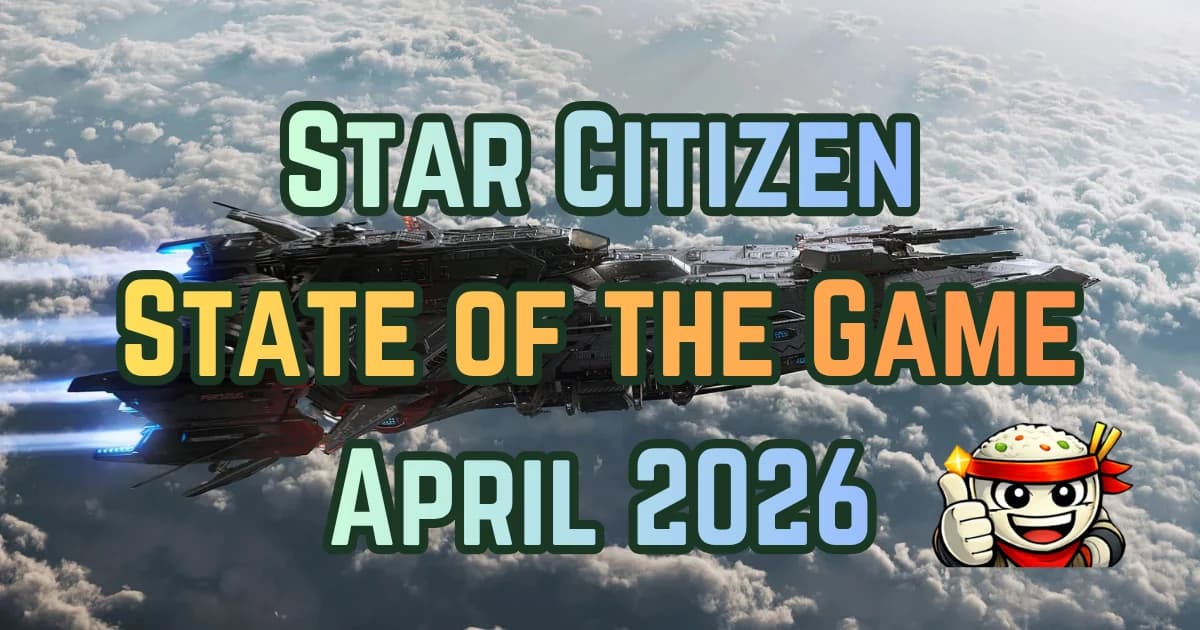
Star Citizen is not a scam. It's also not a finished game. After fourteen years of development, over $700 million in crowdfunding, and a player base that has fractured into true believers and exhausted cynics, the most useful thing you can do is set both camps aside and look at what's actually in front of you.
This is that assessment. No hype. No doom. Just what the game is in April 2026, where it's struggling, and who should actually be spending time in it right now.
Where the Game Stands in Alpha 4.x
The rollout of Star Citizen Alpha 4.0 in late 2024 was the single biggest technical milestone the game had seen in years. Cloud Imperium Games added the Pyro solar system as a second star system, which had been a development goal since the early backers were told the game would eventually have a hundred star systems. Getting to number two took a decade. That is worth acknowledging plainly.
More significant than the new system itself was what had to work for it to function: static server meshing. For years, Star Citizen ran on a single server per instance with a hard cap on players and a hard limit on how large the explorable space could be. Static server meshing breaks the game world into zones handled by separate servers that communicate and hand off players seamlessly. Getting from Stanton to Pyro now means crossing a server boundary that most players never notice. It works. Not always smoothly, but it works in a way that matters.
Alpha 4.1 and 4.2 have continued incremental work on stability, NPC behavior in Pyro's lawless outposts, and the mission content that populates the new system. The Pyro system is intentionally hostile. There's no orbital station with vendor amenities waiting for you. The loop there is scrappier and more dangerous than Stanton, which is either appealing or off-putting depending on your preferred play style.
The current build is playable in a way that wasn't true two years ago. Persistent Entity Streaming, which allows the game to remember your ship, cargo, and gear between sessions rather than resetting everything at every server restart, changed the character of what you're doing when you log in. You're building something that persists. That matters for player investment in a way that is hard to overstate.
The Performance Reality
Here is the honest part: the game still performs inconsistently. Populated areas like Area 18 on ArcCorp and the major space stations can drop frames significantly depending on server health and your hardware. The recommended specs have crept upward as the simulation complexity has grown.
Mid-range hardware will run the game acceptably in most situations. High-end hardware will run it well. Budget hardware will struggle with the same performance variability that has plagued the game since alpha began.
Server-side performance is the bigger issue than client-side performance for most players. When a server is healthy, the game feels genuinely impressive: ships behaving physically, hundreds of dynamic events running across a solar system, NPC economies ticking in the background. When a server is degrading toward its restart window, the experience breaks down quickly. Rubberbanding, quantum travel failures, and inventory desync are less common than they were two years ago, but they haven't been eliminated.
The development roadmap for dynamic server meshing promises to address this at a structural level by allowing the game to spin up additional server resources dynamically as player density increases. That is still in progress. The version that's live is the static implementation, which distributes load geographically but doesn't adapt in real time to population spikes.
Squadron 42: The Campaign That May Define Everything
Squadron 42 is Star Citizen's single-player narrative campaign, and it has existed as a promise since the original 2012 Kickstarter. The cast reads like a prestige TV production: Mark Hamill, Gary Oldman, Gillian Anderson, Henry Cavill, and others across a story set before the events of the persistent universe.
CIG declared Squadron 42 feature complete in 2024, which meant the core gameplay systems were in place and the game had entered a polishing and certification phase rather than active feature development. Whether that timeline held or slipped further is the question the community has been watching closely. As of this writing, the campaign has not had a retail release date confirmed, but the communications out of CIG carry more specificity than they have in years.
The reason Squadron 42 matters for the persistent universe isn't just that it's a promised deliverable. It's that its release would represent the first time Cloud Imperium produces a shippable, reviewable product with a definitive beginning and end. Every criticism about Star Citizen's perpetual alpha status depends, at least partially, on the counterargument that CIG is incapable of shipping anything. Squadron 42's release would answer that.
What we have seen in the most recent demo footage supports the claim that it's a serious production. The flight mechanics are directly ported from the persistent universe. The narrative sequences are well-produced. The question is never really been whether the game looks impressive in demos.
The Funding Number and What It Means
The $700 million figure (and counting) dominates every conversation about Star Citizen. Critics cite it as evidence of either fraud or catastrophic mismanagement. Supporters argue it reflects the genuine ambition of what's being built.
The more useful frame is this: Star Citizen has been funded almost entirely by its players, not by a publisher. That structure has allowed CIG to build without the milestone and release pressure that studios operating under publisher contracts face. It has also removed the external accountability that typically forces scope control.
The game's scope is, objectively, enormous. A fully simulated economy, physicalized first-person combat and ship operation, a server meshing architecture that has no real precedent in live gaming, and a narrative single-player campaign all in one product. Some of this scope was promised and some of it has been added as backers funded new goals.
The financial structure also means that the game's continued development is funded by ongoing ship sales, some of which are for ships that don't yet exist in the game. This is the part that legitimately warrants scrutiny. Buying a concept ship for $300 is a bet on a product that may take years to materialize in a game that is still in alpha. That transaction is legal and disclosed. It is also a real financial risk that every potential backer should take seriously.
For the purposes of playing the game today, the funding question is mostly academic. The game runs. The game is updated regularly. There is no evidence that suggests the project is at risk of shutting down.
What You Actually Do in Star Citizen Right Now
The persistent universe offers more variety of viable play loops than at any point in its development. These are the ones that consistently work:
Bounty Hunting remains the most content-complete combat loop. The mission system sends you after named targets, pirate installations, and wanted ships with clear objectives and adequate AI challenge. It's the activity with the longest history of iteration, and it shows.
Mining with hand tools or ship-mounted lasers is a meditative alternative to combat that has a real economy behind it. Rock values fluctuate based on supply, and efficient miners who know the high-yield asteroids can make competitive money. The loop is slow by design.
Cargo Hauling has become genuinely interesting with the addition of illegal cargo, commodity markets that respond to player activity, and the Pyro-to-Stanton route that carries real risk from piracy. Running clean cargo between stations isn't exciting, but running contraband through a PvP-enabled system is a different kind of engagement.
Exploration and Derelicts in Pyro represent the most content-sparse but atmosphere-rich activity the game currently offers. Abandoned stations and drifting wrecks require manual investigation, offer randomized loot, and carry the kind of environmental storytelling that shows what the game is trying to become.
Multi-crew Operations are where the game's ambitions are most visible and most variable. When a crew of four to eight players coordinates a capital ship or plans a planetary base assault, Star Citizen produces moments that nothing else in gaming replicates. It also requires that many people to be online, coordinated, and operating on a server that stays healthy for the duration. The logistical overhead is real.
Who Should Be Playing This Right Now
If you value emergent gameplay, are patient with technical instability, and find the process of living in a simulated space economy compelling, Star Citizen is worth your time right now. The game has more working loops, more playable content, and better server stability than it has ever had.
If you are waiting for a finished, polished product with a clear beginning and end and consistent technical performance, you are not there yet, and the honest answer is that a specific delivery date still doesn't exist for the full persistent universe.
If you are considering a major financial investment in ship packages, do that with the same skepticism you'd apply to any crowdfunding pledge for a product still in development. The ships you buy today are available in the game. The features promised alongside some of them may take additional development time.
The worst version of engaging with Star Citizen is the one where you buy in expecting the game to be complete and then experience the instability and missing systems as a betrayal. The best version is the one where you understand what it is: an ongoing, technically ambitious, frequently impressive, perpetually unfinished simulation that has been moving in the right direction for the past two years.
The Honest Verdict
Star Citizen in April 2026 is more game than it has ever been. The Pyro system, static server meshing, and persistent entity streaming represent genuine technical progress that would have seemed implausible in 2020. The core loops are more populated with content than they were eighteen months ago.
It is still an alpha. That is not a dismissal. It is an accurate description of where the product is in its development cycle and what that means for the player experience. Bugs exist. Wipes still happen on the test environments. Some promised systems are still in design.
The path forward is clearer than it has been at any point since the project began. That's worth something. Whether it's worth your time specifically depends entirely on how you define a game being worth playing.
For players who have been on the fence: the current build is the strongest case for getting in that the project has made. For players who burned out in earlier alphas: 4.x is a meaningfully different experience. For players who have never touched it: start with a basic Aurora or Mustang package, give it ten hours, and form your own opinion before the discourse on either side of this argument does it for you.
The game will not be done soon. What it already is deserves an honest look.
Written by
ApexInterfectum
Co-Founder, PUG Empire | Army Veteran | Full Stack Developer
ApexInterfectum is an Army veteran and co-founder of PUG Empire, a competitive gaming community built on coordinated team play and continuous improvement. He brings a full-stack development background to community tooling and content infrastructure, and serves as technical subject matter expert across the Dirty Rice platform. His writing covers the systems and strategies behind sustainable content creation, competitive growth, and modern streaming workflows.
Community Rating
Rate this article:
Intel & Reactions - (0)
Sign in with Discord to join the conversation.
No comments yet. Be the first to drop some intel.